

LABORATORIO DE ECOFISIOLOGÍA DEL ESTRÉS ABIÓTICO EN PLANTAS

El objetivo general del laboratorio es el estudio de mecanismos ecofisiológicos relacionados con los efectos y respuestas al estrés abiótico (i.e. inundaciones, sequía, salinidad, defoliación, deficits nutricionales), ocurriendo de manera aislada, combinada o secuencial, en plantas de interés agronómico.
Abordamos preguntas de interés y novedad en relación a la tolerancia del estrés abiótico en parámetros asociados con la germinación y desarrollo de plántulas, respuestas ecofisiológicas de plantas adultas y parámetros productivos a nivel de canopeo asociados con la supervivencia al estrés, la recuperación de las tasas de crecimiento post-estrés y la persistencia de las plantas en ambientes con limitaciones.
INTEGRANTES
Dr. Agustín A. Grimoldi

Investigador Principal CONICET
Profesor Titular FAUBA – Cátedra Forrajicultura
Dr. Gustavo G. Striker

Investigador Independiente CONICET
Profesor Asociado FAUBA – Cátedra Fisiología Vegetal
Dr. Federico P. Mollard

Investigador Independiente CONICET
Profesor Adjunto FAUBA – Cátedra Fisiología Vegetal
Dra. Carla E. Di Bella

Investigadora Adjunta CONICET
Profesora Adjunta FAUBA – Cátedra Forrajicultura
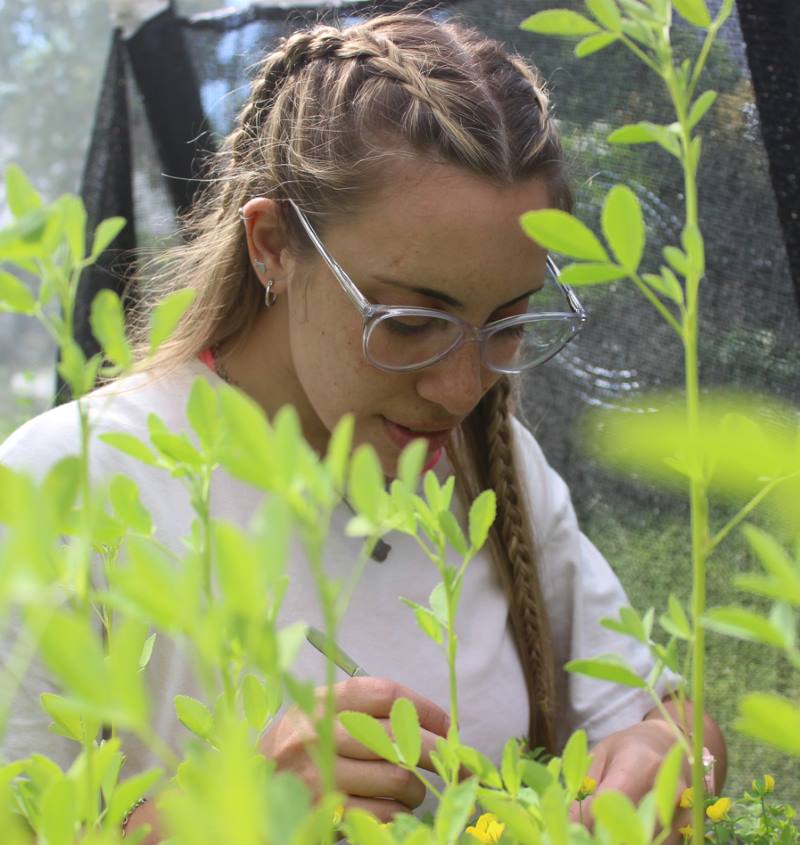
M. Sc. María José Adis

Becaria Doctoral FONCyT
Ayudante 1° FAUBA – Cátedra Forrajicultura
Ing. Agr. Ariel Valverde

Becario Doctoral UBACyT
Ayudante 1° FAUBA – Cátedra Fisiología Vegetal
Dra. Juliana Echeverry Holguín

Ayudante 1° FAUBA- Cátedra Fisiología Vegetal
PUBLICACIONES
(2020-2026)
Di Bella CE, Menon-Martínez FE, Calvete A,Sandá TC, Striker GG, Grimoldi AA. 2026. Unveiling root morpho-anatomical traits driving tolerance to waterlogging, salinity, and their combination in Festuca arundinacea. Functional Plant Biology 53: FP25193 (doi.org/10.1071/FP25193)
Di Bella CE, Striker GG, Scheneiter JO, Grimoldi AA. 2026. Factores abióticos perjudiciales. Pgs. 151-186. En: La festuca alta en la Argentina. (Eds. Bertín OD, Scheneiter JO). Editorial Asociación Argentina de Producción Animal. ISBN 978-987-99423-7-6.
Echeverry Holguín J, Crepy M, Striker GG, Mollard FPO. 2026. Flooding during the growing season does not promote Echinochloa colona seedling emergence but shifts cohorts to summer drawdown periods. Plant and Soil 519: 1649–1661 (doi.org/10.1007/s11104-025-08237-1)
Mattera J, Irisarri JGN, Cordon GB, Cuatrín A, Grimoldi AA. 2026. Influence of tall fescue ecotype on biomass production, radiation interception and use efficiency in alfalfa-based pasture mixtures. Grasses 5, 19 (https://doi.org/10.3390/grasses5020019)
Decurgez C, Cordon GB, Fernández Bidondo L, Rothen C, Grimoldi AA, Casas C. 2026. Drought-response strategies in arbuscular mycorrhizal symbioses are shaped by inoculum environmental origin. Plant & Soil 522: 837–854 (https://doi.org/10.1007/s11104-026-08548-x)
Lanati M, Omacini M, Grimoldi AA, García-Parisi PA. 2026. Foliar fungal endophytes and common mycorrhizal networks shape nitrogen dynamics in multi-symbiotic grass-legume systems. Plant & Soil 521: 1499–1515 (https://doi.org/10.1007/s11104-026-08458-y)
Pinilla Olarte DA, Mollard FPO, Striker GG, Rua GH. 2025. The architecture of submergence escape in two contrasting accessions of the stoloniferous grass Paspalum denticulatum. Functional Plant Biology 52: FP25196 (https://doi.org/10.1071/FP25196)
Striker GG, Yamauchi T, Mollard FPO. 2025. Maize physiology under waterlogging: shoot and root adaptive responses to mitigate low oxygen stress. Journal of Experimental Botany eraf424 (https://doi.org/10.1093/jxb/eraf424)
Decurgez CG, Schnyder H, Gundel PE, Striker GG, Biganzoli F, Fazio L, Casas C. 2025. Foliar fungal endophyte triggers host ecophysiological and morphological responses to drought and waterlogging. Plant and Soil 515: 915-932 (doi.org/10.1007/s11104-025-07634-w)
Buraschi FB, Mollard FPO, Cordon G, Grimoldi AA, Striker GG. 2025. Submergence of forage legumes: Lotus species show better tolerance than Trifolium and Melilotus species due to their superior recovery after stress. Functional Plant Biology 51: FP24206 (doi.org/10.1071/FP24206)
Lanati M, Omacini M, Grimoldi AA, García-Parisi PA. 2025. Below- and aboveground plant fungal symbionts from crop-pasture systems interactively influence grass and legume wellness. Journal of Applied Ecology 62, 3480-3491 (DOI: 10.1111/1365-2664.70198)
Mattera J, Romero JM, Irisarri JGN, Grimoldi AA, Cordon GB. 2025. Deciphering the link between SIF, ANPP and RUE dynamics in perennial forage crop mixtures. Agricultural and Forest Meteorology, 110569 (https://doi.org/10.1016/j.agrformet.2025.110569)
García-Parisi PA, Druille M, Grimoldi AA, Lattanzi FA, Omacini M. 2025. Emergent benefits of arbuscular mycorrhizal fungi in multisymbiotic grass-legume mixtures. Plant and Soil, 7173 (https://doi.org/10.1007/s11104-024-07173-w)
Ploschuk RA, Miralles DJ, Kavanová M, Striker GG. 2024. Identifying the numerical components affecting soybean (Glycine max) yield under waterlogging at reproductive stages. Journal of Agronomy and Crop Science 210:e12764 (DOI: 10.1111/jac.12764)
Striker GG. 2024. “Oxygen transport and plant ventilation”. En M. Nakazono, J Sakagami (eds) Responses of Plants to Soil Flooding. Chapter 9. Pp 139-156. DOI: 10.1007/978-981-99-9112-9. Springer Nature. ISBN 978-981-99-9111-2
Grimoldi AA, Di Bella CE. 2024. Forage plant ecophysiology under different stress conditions. Plants 13, 1302. (https://doi.org/10.3390/plants13101302)
Buraschi FB, Mollard, FPO, Di Bella CE, Grimoldi AA, Striker GG. 2024. Shaking off the blow: plant adjustments during submergence and post-stress growth in Lotus forage species. Functional Plant Biology 51, FP23172 (DOI: https://doi.org/10.1071/FP23172)
Fina F, Bertram N, Gatti ML, Di Bella CE, Grimoldi AA, Berone GD. 2024. Halo-hydromorphism alters nitrogen fertilization responses of tall wheatgrass pastures: capture and use of resources, tiller dynamics and forage production. Journal of Agronomy and Crop Science 210 (3): e12698 (DOI: https://doi.org/10.1111/jac.12698)
Echeverry Holguín J, Crepy M, Striker GG. y Mollard FPO. 2024. Boosting underwater germination in Echinochloa colona seeds: the impact of high amplitude alternating temperatures and potassium nitrate osmopriming. Functional Plant Biology 51: FP23184 (DOI: https://doi.org/10.1071/FP23184)
Menon-Martínez FE, Grimoldi AA, Striker GG, Di Bella CE. 2024. Changes in morphological traits associated with waterlogging, salinity, and saline waterlogging in Festuca arundinacea. Functional Plant Biology 51: FPB23140 (DOI: https://doi.org/10.1071/FP23140)
da Silva Martins T, Da-Silva J, Shabala S, Striker GG, Carvalho IR, Barneche de Oliveira AC, do Amarante L. 2024. Understanding plant responses to saline waterlogging: insights from halophytes and implications for crop tolerance. Planta 259: 1-24 (DOI:https://doi.org/10.1007/s00425-023-04275-0)
Striker GG. 2023. An overview of oxygen transport in plants: diffusion and convection. Plant Biology 25: 842–847 (DOI:10.1111/plb.13558)
Ploschuk RA, Miralles DJ, Striker GG. 2023. Root mass density and canopy dynamics in wheat, barley, oilseed rape and pea are differentially impacted by early- and late-waterlogging. Agronomy Journal 115: 2506–2520 (DOI: 10.1002/agj2.21403)
Pérez Pizá MC, Striker GG, Stenglein SA. 2023. Seed-borne diseases in pasture grasses and legumes. State-of-the-art and gaps in knowledge. Journal of Plant Disease and Protection 130: 225-244 (DOI: 10.1007/s41348-022-00703-7)
Mollard FPO, Di Bella CE, Loguzzo MB, Grimoldi AA, Striker GG. 2022. High recovery from either waterlogging or drought overrides any beneficial acclimation of Chloris gayana facing a subsequent round of stress. Plants 11: 2699 (DOI: 10.3390/plants11202699)
Di Bella CE, Grimoldi AA, Striker GG. 2022. A quantitative revision of the waterlogging tolerance of perennial forage grasses. Crop and Pasture Science 73(10): 1200-1212 (DOI:10.1071/CP21707)
Ploschuk RA, Miralles DJ, Striker GG. 2022. A quantitative review of soybean responses to waterlogging: agronomical, morpho-physiological and anatomical traits of tolerance. Plant and Soil 475: 237-252 (DOI:10.1007/s11104-022-05364-x)
De San Celedonio, LG Abeledo, Striker GG, Miralles DJ. 2022. Nitrogen accumulation and remobilization in wheat and barley plants exposed to waterlogging at different developmental stages. Crop and Pasture Science 73: 615-626 (DOI:https://doi.org/10.1071/CP21569)
Rodríguez AM, Jacobo EJ, Grimoldi AA, Golluscio RA. 2022. Glyphosate sprayed on the pre-existing vegetation reduces seedling recruitment and growth of forage species. Revista de la Facultad de Ciencias Agrarias 54: 35-45 (DOI:https://doi.org/10.48162/rev.39.063)
Menon-Martínez FE, Grimoldi AA, Striker GG, Di Bella CE. 2021. Variability among Festuca arundinacea cultivars for tolerance to and recovery from waterlogging, salinity and their combination. Crop and Pasture Science 72:75–84 (https://doi.org/10.1071/CP20289)
Ploschuk RA, Miralles DJ, Striker GG. 2021. Early- and late-waterlogging differentially affect the yield of wheat, barley, oilseed rape and field pea through changes in leaf area index, radiation interception and radiation use efficiency. Journal of Agronomy and Crop Science 207: 504-520 (DOI:https://doi.org/10.1111/jac.12486)
Ciancio N, Miralles DJ, Striker GG, Abeledo LG. 2021. Plant growth rate after, and not during, waterlogging better correlates to yield responses in wheat and barley. Journal of Agronomy and Crop Science 207: 304-316 (DOI:https://doi.org/10.1111/jac.12472)
Cavagnaro RA, Oyarzabal M, Oesterheld M, Grimoldi AA. 2021. Species-specific trade-offs between regrowth and mycorrhizas in the face of defoliation and phosphorus addition. Fungal Ecology 51, 101058 (DOI: https://doi.org/10.1016/j.funeco.2021.101058)
Buraschi FB, Mollard FP, Grimoldi AA, Striker GG. 2020. Eco-physiological traits related to recovery from complete submergence in the model legume Lotus japonicus. Plants, 9, 538 (DOI:https://doi.org/10.3390/plants9040538)
Echeverry Holguín J, Crepy M, Striker GG, Mollard FPO. 2020. Dormancy breakage and germination are tightly controlled by hypoxic submergence water on Echinochloa crus-galli seeds from an accession resistant to anaerobic germination. Seed Science Research 30: 262-267 (https://doi.org/10.1017/S0960258520000070)
Di Bella CE, Kotula L, Striker GG, Colmer TD. 2020. Submergence tolerance and recovery in Lotus: Variation among – fifteen accessions in response to partial and complete submergence. Journal of Plant Physiology 249: 153180. (DOI: https://doi.org/10.1016/j.jplph.2020.153180)
Kidd D, Di Bella CE, Kotula L, Colmer TD, Ryan M, Striker GS. 2020. Defining the waterlogging tolerance of Ornithopus spp. for the temperate pasture zone of southern Australia. Crop and Pasture Science 71:506–516. (DOI: https://doi.org/10.1071/CP19491)
Loreti E, Striker GG. 2020. Plant responses to hypoxia: signaling and adaptation[artículo editorial] Plants 9: 1704 (DOI: https://doi.org/10.3390/plants9121704)
Iturralde Elortegui MRM, Berone GD, Striker GG, Martinefsky MJ, Monterubbianesi G, Assuero SG. 2020. Anatomical, morphological and growth responses of Thinopyrum ponticum plants subjected to partial and complete submergence during early stages of development. Functional Plant Biology 47: 757-768 (DOI:https://doi.org/10.1071/FP19170)
Ploschuk RA, Miralles DJ, Colmer TD, Striker GG. 2020. Waterlogging differentially affects yield and components in wheat, barley, rapeseed and field pea depending on the timing of occurrence. Journal of Agronomy and Crop Science 206: 363-375 (DOI: https://doi.org/10.1111/jac.12396)
Manzur ME, Grimoldi AA, Striker GG. 2020. The forage grass Paspalum dilatatum tolerates partial but not complete submergence either caused by deep water or repeated defoliation. Crop and Pasture Science 71: 190-198 (DOI: https://doi.org/10.1071/CP19303)
PRODUCTOS TECNOLÓGICOS Y/O SERVICIOS DE ASISTENCIA TÉCNICA
2019-2026. Exp-UBA 79361/2019. Plataforma de Extensión “MAS-PASTO: Manejo Sustentable del Pastoreo”. FAUBA y Fundación Facultad de Agronomía, UBA. Participación de Agustín Grimoldi y Carla Di Bella (https://maspasto.agro.uba.ar/)
2024-2025: Convenio de Asistencia Técnica al Establecimiento “El Desparejo”. “Determinación de ambientes salinos mediante imágenes”. CONVE-2024-06495723-UBA-DVG#SDRI_FAGRO. Responsables: Cecilia Casas, Pablo Baldassini, Carla E. Di Bella
2015 – 2016: Convenio Específico de Colaboración Técnica entre la Facultad de Agronomía (UBA) y la empresa GENTOS S.A. (Exp-UBA: 69812/2015). Se realizaron dos informes técnicos: “INFORME TECNICO. Tolerancia al anegamiento en gramíneas. Prueba de cultivares de Festuca arundinacea”. “INFORME TECNICO. Tolerancia al anegamiento en leguminosas. Trébol blanco, trébol balansa, Lotus corniculatus, Lotus tenuis y trébol frutilla”. Responsables: G. Striker, A. Grimoldi, C. E. Di Bella, R. Ploschuck.
PROYECTOS VIGENTES
(2026 – 2029)
“Mecanismos ecofisiológicos de tolerancia y recuperación de la inundación asociados con la germinación y el establecimiento de leguminosas del género Lotus”
Proyecto UBACyT (2023-2027) – Director: GG Striker – Co-director: AA Grimoldi
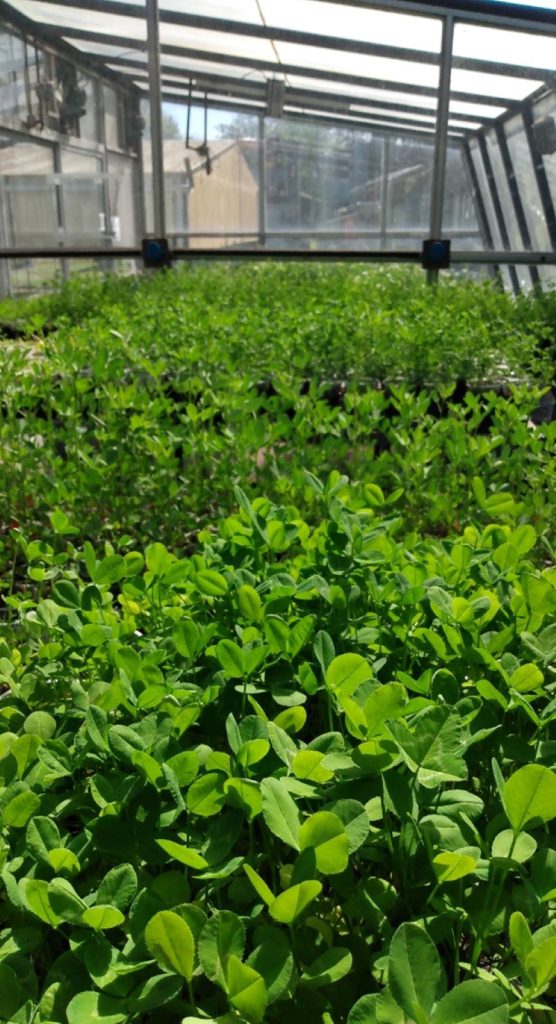
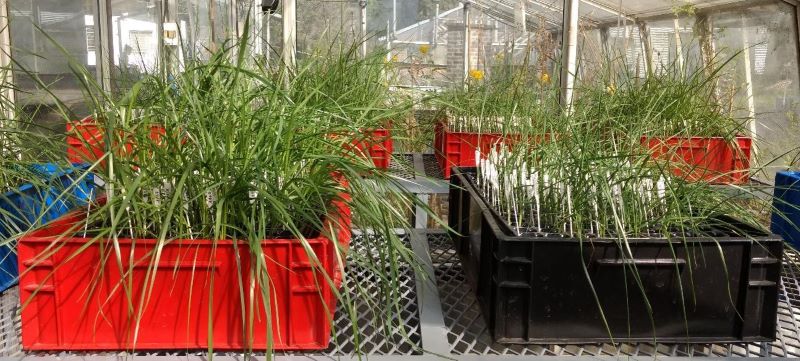
“Estudio del efecto de anegamiento, la salinidad y el anegamiento salino en etapas tempranas del desarrollo en festuca alta”
Proyecto UBACyT (2026-2027) – Directora: CE Di Bella
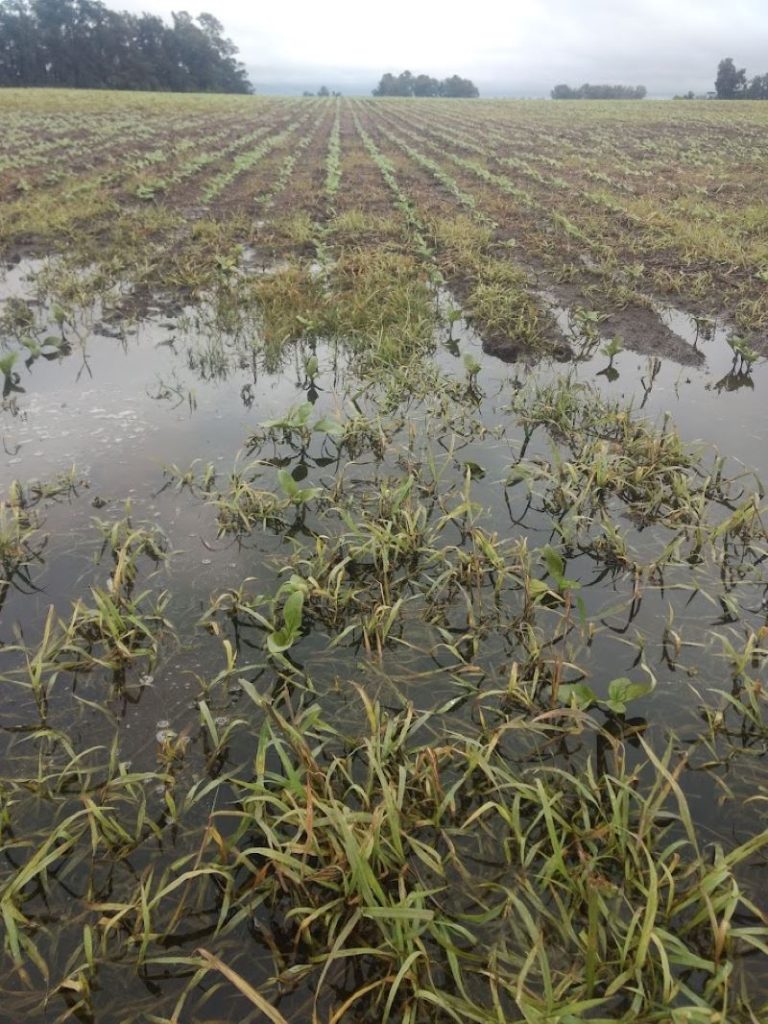
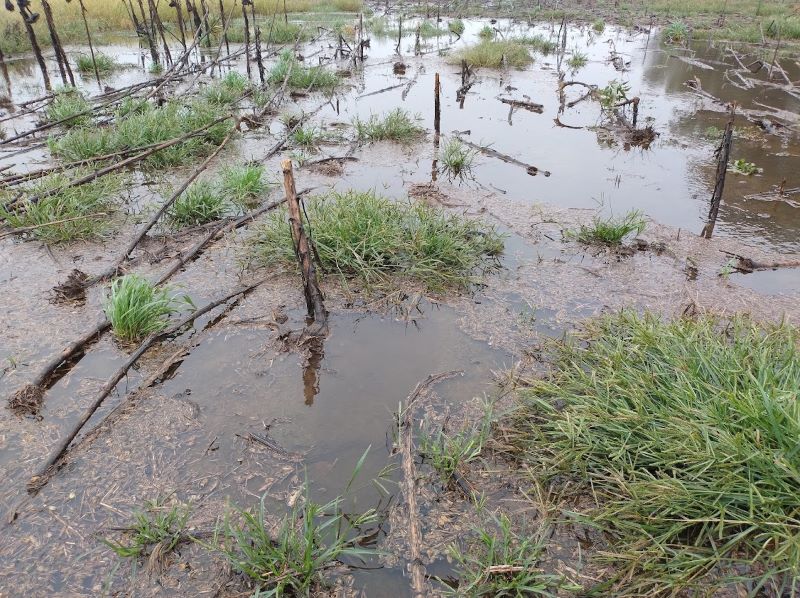
“Impacto de las inundaciones sobre la dispersión, establecimiento y fecundidad de malezas gramíneas de cultivos de grano”
Proyecto UBACyT (2026-2029) – Director: F Mollard
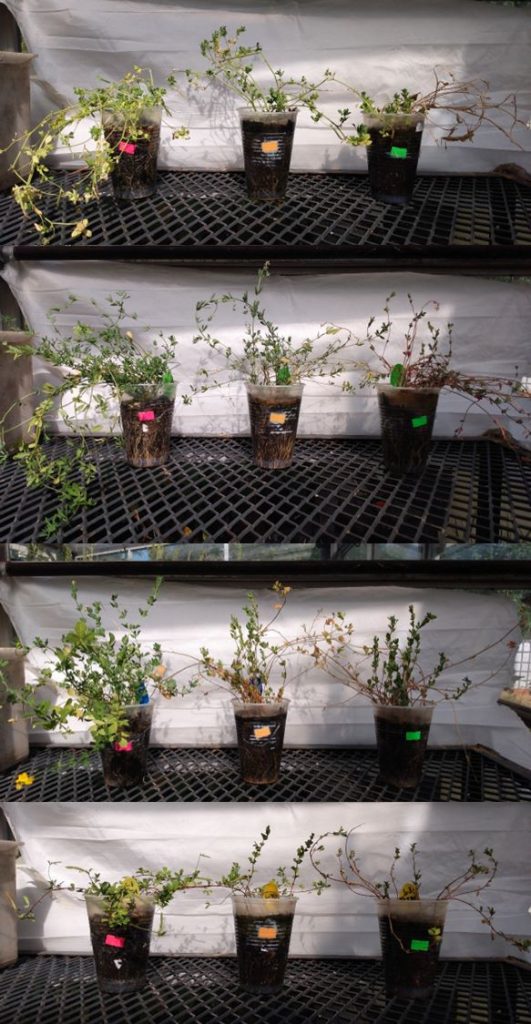
“Mecanismos ecofisiológicos de tolerancia a la inundación asociados con el establecimiento y la producción en leguminosas del género Lotus spp. a nivel individual y de canopeo”
Proyecto ANPCyT PICT (2023-2027) – Director: GG Striker
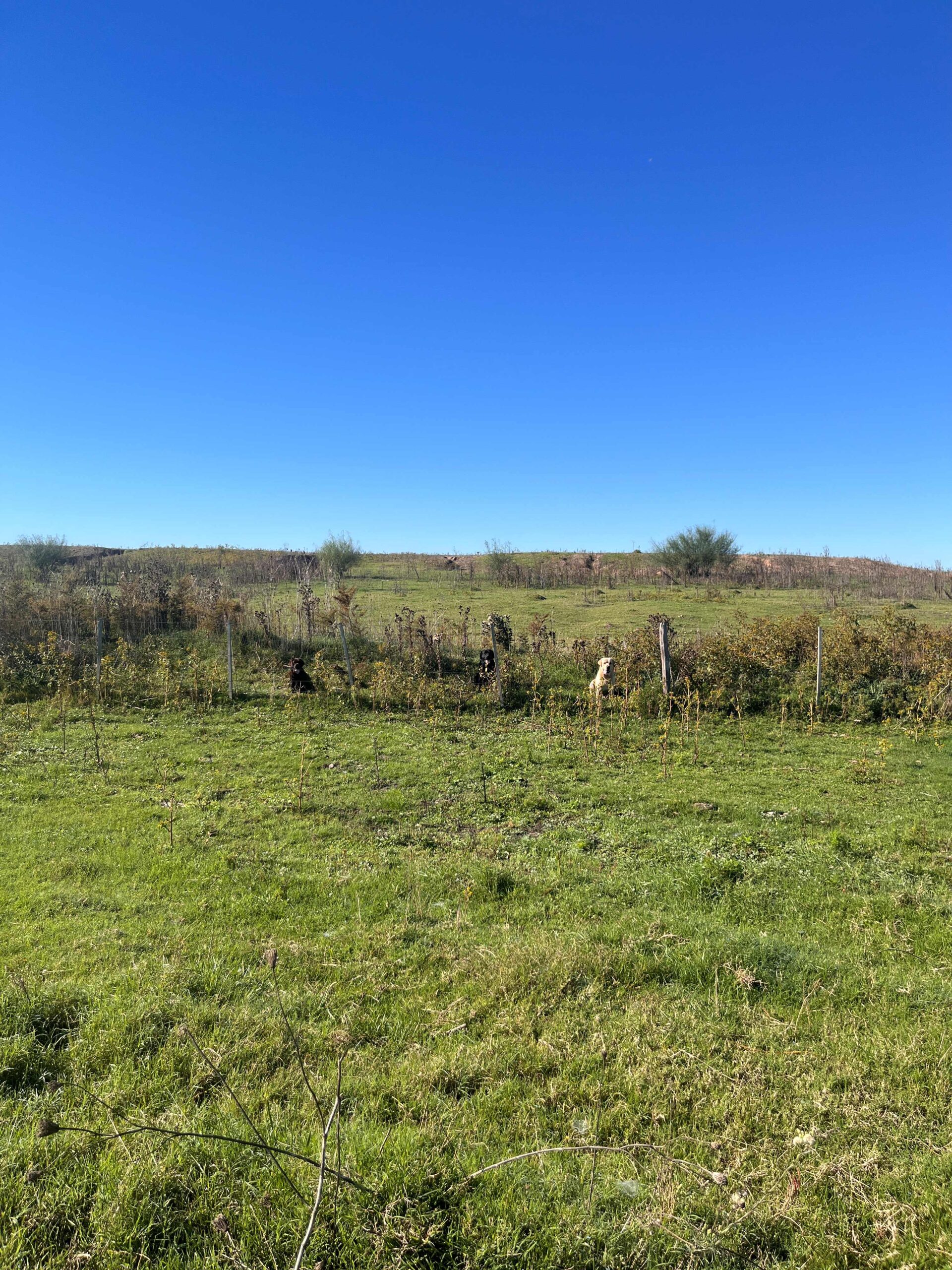
“De pasivo ambiental a recurso productivo: revegetación forrajera de sedimentos de dragado del Río Salado en la Pampa Argentina”
Proyecto Williams (2026-2027) – Director: GG Striker
“Dinámica de las reservas de carbono y estrategias de recuperación en leguminosas forrajeras bajo estrés combinado de inundación y defoliación”
Proyecto CONICET-PIP (2026-2029) – Director: GG Striker